RASHIKA KAUSHAL JAIN
INITIALIZING SYSTEM...
Your browser does not support canvas.
Data Analyst | AI-Assisted Product Engineer

Rashika Kaushal Jain

Turning "what is this mess?" into data that powers real products

SCROLL
01 — ABOUT
Think you've seen it? Hover ↓
Rashika Kaushal Jain
1 Year
5+ Projects
∞ Music

Who I Am

I’m a second-year B.Tech Data Science student. Got into coding, started with Python — it clicked, and I kept going.
I focus on analyzing data to extract insights and building web solutions that solve real-world problems. Not because it sounds good, but because solving real problems is more interesting than just studying them.

From my first hackathon to building real web apps in under a year, I’ve been figuring things out by actually doing the work — breaking things, fixing them, and learning in the process.

For me, understanding why something broke is the key to fixing it. I enjoy diving deep into the root cause to build stronger, more reliable systems.

Still figuring things out? Yeah. But I show up, I build, and I get better every time. This is just the start.

02 — STARTUP

Founder Experience: Building Kaushift — The Unfiltered Startup Community

The Observation

As a Gen Z builder in the Indian startup ecosystem, I started noticing something that honestly bothered me. Everywhere I looked, I was seeing funding announcements, success stories, and this whole “hustle” culture. But very rarely did I see people talking about startups that actually failed. And that felt like a problem. Because if you’re a young founder trying to build something, you’re mostly learning from the startups that survived. You don’t really get to see what went wrong for the thousands that didn’t. So I felt like a lot of founders were entering this space without knowing what they were actually getting into.

The Bottleneck

That’s when I started thinking about building a community around startup failures — a place where founders could share post-mortems, talk about problems they’re facing right now, and basically share the things you usually don’t see publicly.

But then I ran into a pretty obvious problem. Why would a founder actually share their failure publicly?

Especially in a society where failure can affect how people see you, your career, or even your credibility. That was probably the hardest part of the entire idea.

The Breakthrough

While researching this, I realized that psychological safety had to come first. So I came up with the idea of Verified Anonymity.

Basically, on the backend, we verify that someone is actually a legitimate business owner. That keeps the platform credible and prevents it from becoming a space full of random or fake stories. But publicly, that person stays completely anonymous. So you get the credibility of verification without forcing someone to attach their name to a failure they’re sharing.

And I think that’s what can actually make people comfortable enough to share the things they normally wouldn't.

The Execution

Right now, I’m building Kaushift completely solo. I’m currently working on the V1, and I’m not trying to build everything at once. I’m specifically designing it around the first 100 users and figuring out what actually works for them. The initial version has one unified feed, but it’s divided into three main areas: failed startup post-mortems, active founder struggles, and guidance from experienced founders.

The goal is pretty simple: instead of only learning from the startups that made it, I want founders to also be able to learn from the ones that didn't.

03 — SKILLS

Arsenal

The tools I wield to build, analyze, and ship.

Languages

PythonPython
JavaJava
C++C++
JavaScriptJavaScript
PythonPython
JavaJava
C++C++
JavaScriptJavaScript
PythonPython
JavaJava
C++C++
JavaScriptJavaScript

Libraries

NumPyNumPy
PandasPandas
MatplotlibMatplotlib
NumPyNumPy
PandasPandas
MatplotlibMatplotlib
NumPyNumPy
PandasPandas
MatplotlibMatplotlib

Databases & Formats

SQLSQL
MongoDBMongoDB
JSONJSON
CSV
SQLSQL
MongoDBMongoDB
JSONJSON
CSV
SQLSQL
MongoDBMongoDB
JSONJSON
CSV

Backend Tools

FlaskFlask
FirebaseFirebase
SupabaseSupabase
FlaskFlask
FirebaseFirebase
SupabaseSupabase
FlaskFlask
FirebaseFirebase
SupabaseSupabase

Frontend & Design

HTMLHTML
CSSCSS
UI/UX Design
FigmaFigma
CanvaCanva
Responsive Design
HTMLHTML
CSSCSS
UI/UX Design
FigmaFigma
CanvaCanva
Responsive Design
HTMLHTML
CSSCSS
UI/UX Design
FigmaFigma
CanvaCanva
Responsive Design

Platforms

GitGit
GitHubGitHub
VercelVercel
JupyterJupyter
PythonAnywherePythonAnywhere
GitGit
GitHubGitHub
VercelVercel
JupyterJupyter
PythonAnywherePythonAnywhere
GitGit
GitHubGitHub
VercelVercel
JupyterJupyter
PythonAnywherePythonAnywhere
04 — MY PROJECTS

Ideas I Built

Real problems. Practical solutions. A collection of projects I've built to learn, explore and grow.

05 — PUBLICATIONS

The Write-Up

One paper. Real problem. Still early — and that's the point.

01
Preprint Zenodo v1 Architecture

Offline Emergency Alert Using Compressed Broadcast Codes & On-Device AI

An offline-first emergency alert system that combines a small, compressed cell-broadcast message with an on-device Small Language Model, so devices can generate localized and personalized alerts without needing internet access.

Existing systems like Cell Broadcast Service are limited to short, fixed-language messages, which makes it hard to support multiple languages or personalize instructions without exceeding bandwidth limits. This paper proposes a system where the government sends a compressed message (19–32 bytes) containing the disaster type, user role, evacuation route, and error-checking info. Based on the device’s hardware, it either shows a predefined alert (Tier-1) or uses an on-device SLM to generate a more detailed, personalized message (Tier-2). To keep this safe, the AI is not allowed to create safety-critical information on its own — it only formats and translates verified data, and a rule-based validation system rejects any output that doesn’t match.

This paper presents the first version of the system architecture and design. A working prototype is currently being developed, and testing is ongoing.
DOI: 10.5281/zenodo.21357525 · Medi-Caps University · July 2026
06 — EXPERIENCE

The Journey

12 Jun · 2025

Chose My Path

Got into Data Science. Picked up Python, and something just clicked. That’s where it all started.

Sept - Oct · 2025

First Hackathon & Building Prototypes

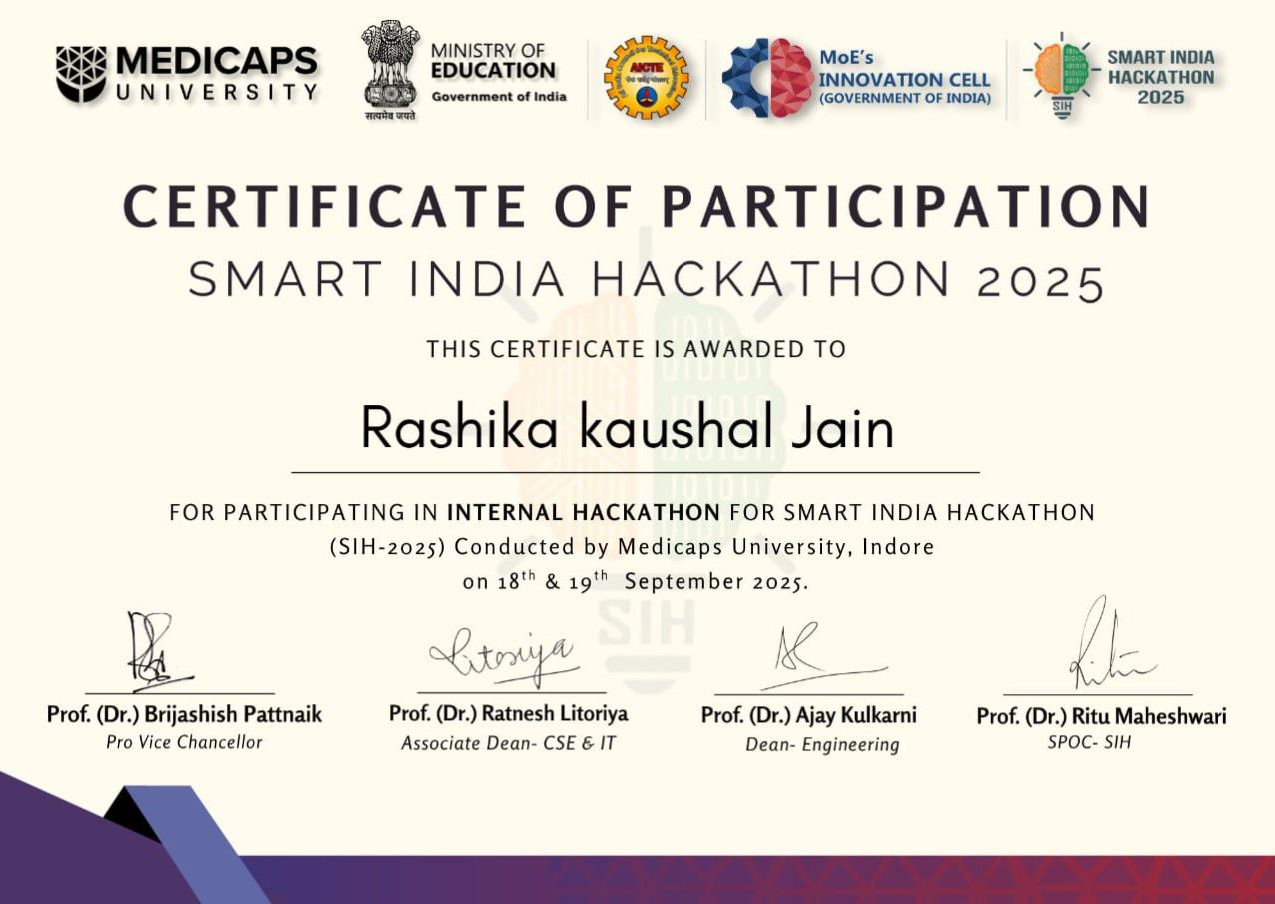
Participated in my first hackathon (Smart India Hackathon). While I didn't win, it sparked a desire to build. Soon after, I began using AI tools to build prototypes, shifting my focus from just studying to actually executing and making things work.

Dec 2025 - Jan 2026

GitHub Launch & Web Development

Created my GitHub account and dove deep into web development. Started turning AI ideas into functional apps and built my portfolio, learning JavaScript, JSON, and layout logic along the way.

Apr - May · 2026

Purpose-Driven Projects & First Internship

Shifted focus towards solving real-world problems with data and intelligent systems. Secured my first internship, where I developed and maintained a local business's website, handling frontend UI, deployment, and operations.

Jun · 2026

Google Cloud & ISRO Hackathons

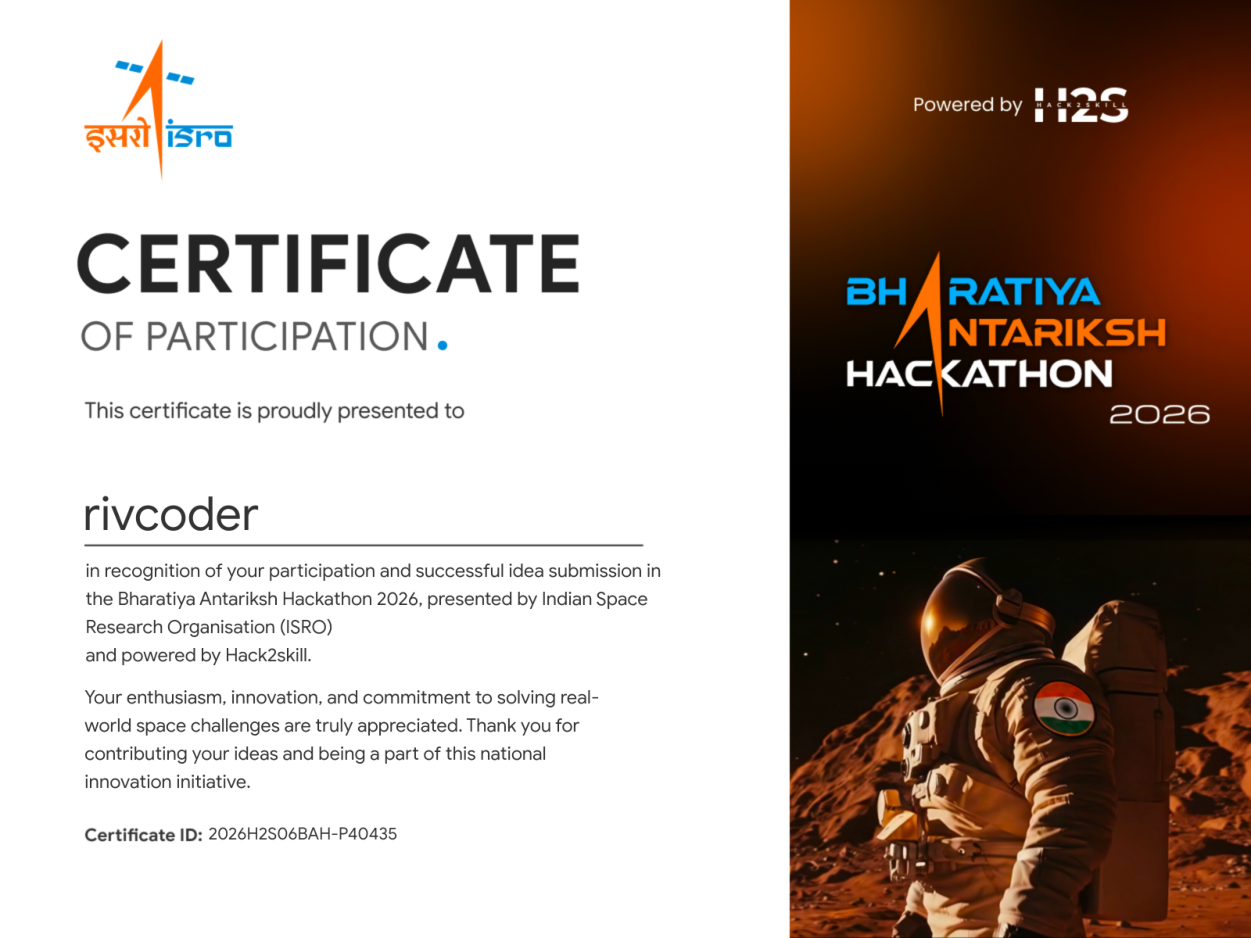
Built a closed-loop AI security agent solo in 7 days for the Google Cloud Rapid Agent Hackathon, scanning repos for credential leakage and auto-remediating. Immediately followed it up by participating in the ISRO Bharatiya Antariksh Hackathon 2026, solving Problem Statement 9. Had an intense, rewarding experience with immense learning in space-tech and automated security.

14 Jul · 2026

First Research Publication

Published my first research paper, introducing an offline-first emergency alert architecture. Proved how compressed cell-broadcast payloads (19–32 bytes) combined with on-device SLMs can deliver localized, personalized alerts even in complete network outages.

Sept · 2026

Winning SIH 2026 Internal Round

Participated in the Smart India Hackathon (SIH) 2026 internal round and emerged as the winner. I was the team lead for our team "Procrix," where we built an impactful project focused on disaster management.

07 — ACHIEVEMENTS

Achievements

Certifications & recognitions earned along the way.

🏅

Smart India Hackathon

Ministry of Education, Govt. of India

🏅

ISRO Certification

Indian Space Research Organisation (ISRO)

🏅

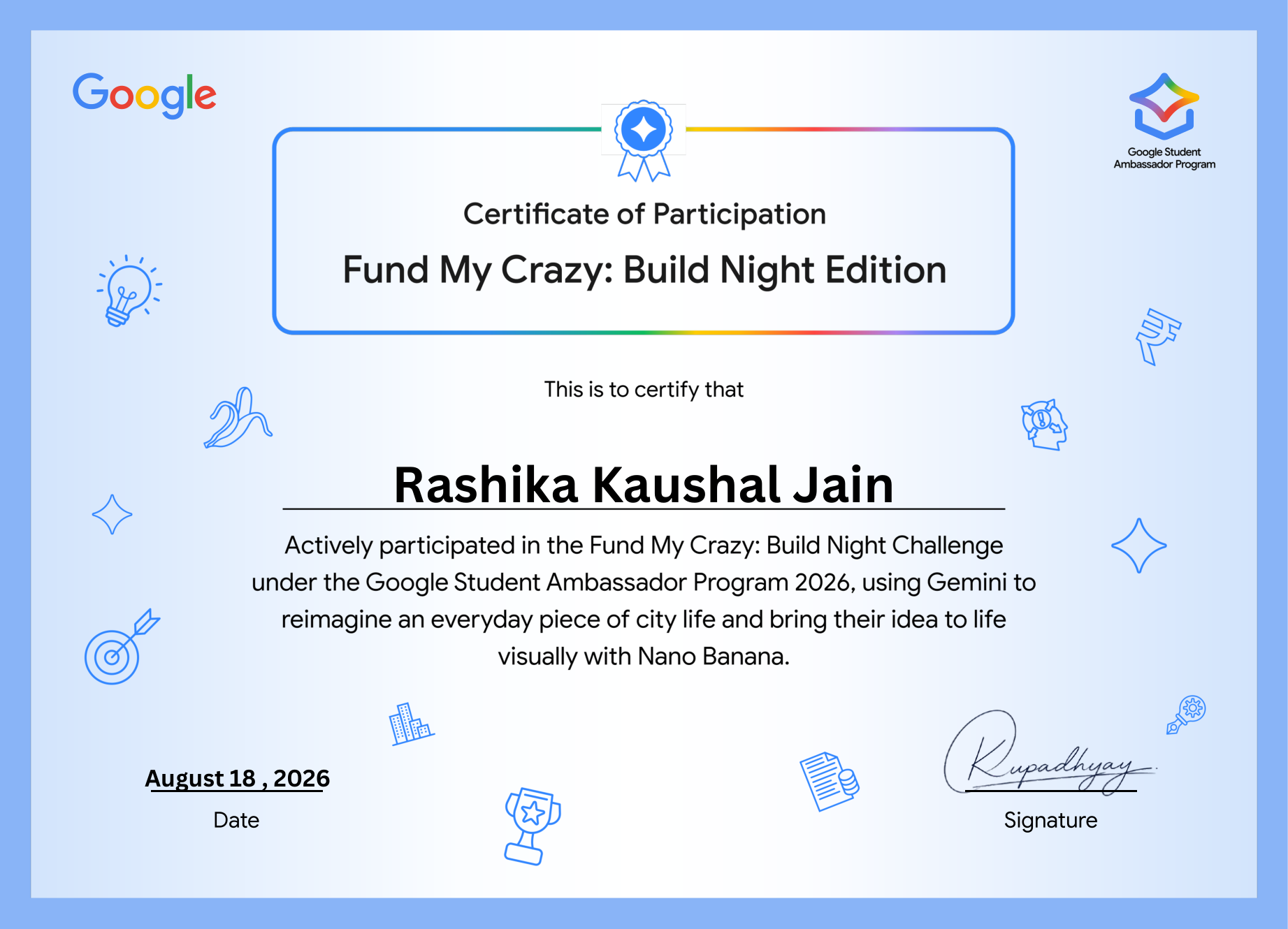
Certificate of Participation

Google, Fund My Crazy

🏅

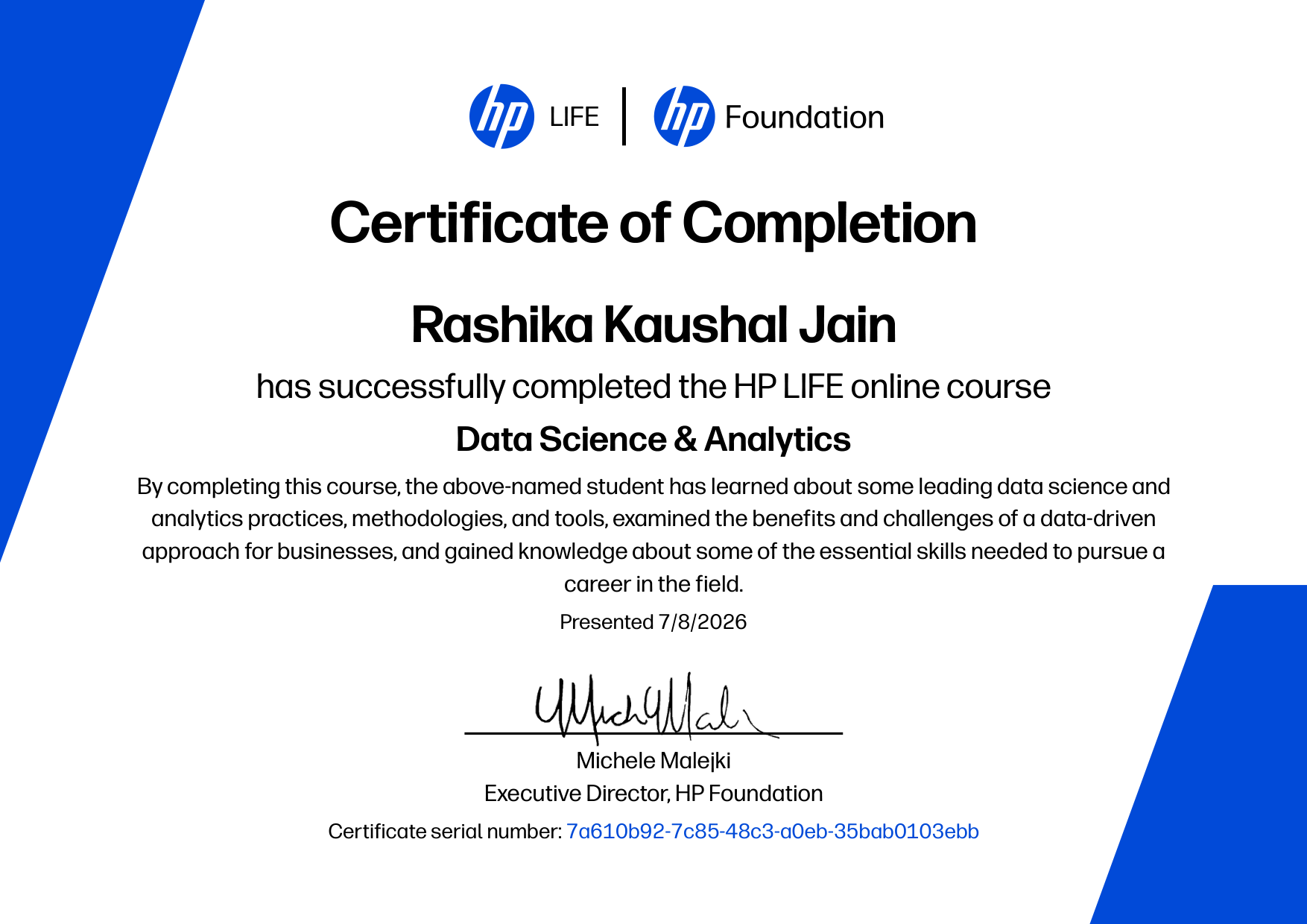
Data Science & Analytics

HP LIFE Foundation

🏅

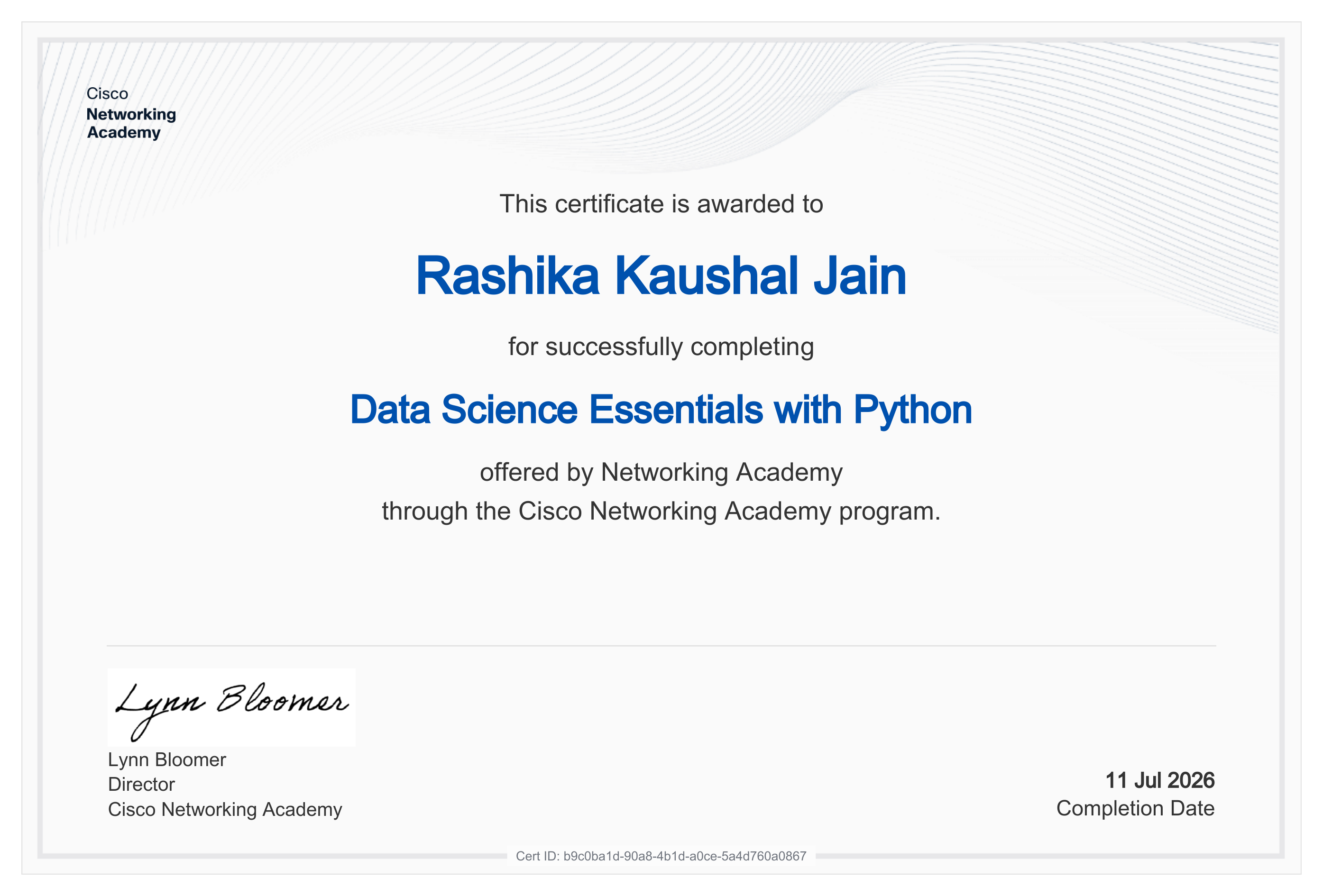
Data Science Essentials with Python

Cisco Networking Academy

🏅

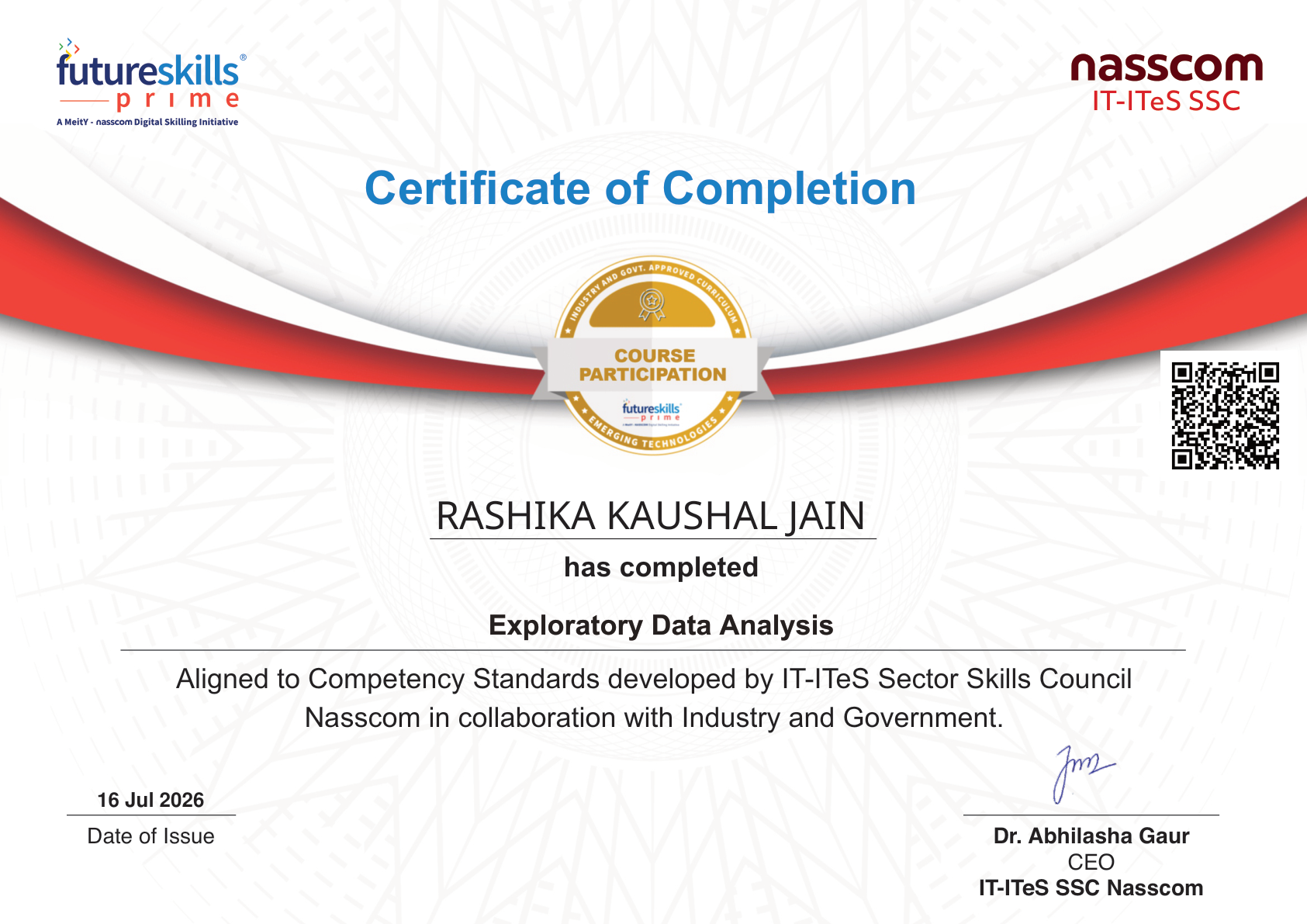
Exploratory Data Analysis

IT-ITeS SSC Nasscom

Apart from these major achievements, here are a few milestones that reflect my curiosity beyond the screen.
🏆 International Math Olympiad — Gold Medal (2022–23 Session) — Secured a Gold Medal in the International Math Olympiad, reflecting strong analytical and problem-solving skills — the same foundation that drives my interest in data and AI today.
🏆 UCMAS Trophies (2019) — Won multiple trophies and a gold medal in UCMAS, an abacus-based mental math program, building early skills in speed calculation, focus, and logical thinking.
🏆 Intra-College E-Poster Competition — 3rd Position (March 2026) — Secured 3rd position in an intra-college e-poster competition, presenting research/analytical work in a visually structured format.

08 — CONTACT

If it's real, I'm in.

I'm interested in building things that matter. If you too, reach out.

· ·
ENTERING

PROJECTS